CNC Milling vs. CNC Turning: How to Choose the Right Process for Your Part
Choosing between CNC milling and CNC turning starts with the part geometry—not the name of the machine. This guide helps buyers and engineers describe their part clearly before requesting a quote.
Start with the shape of the part
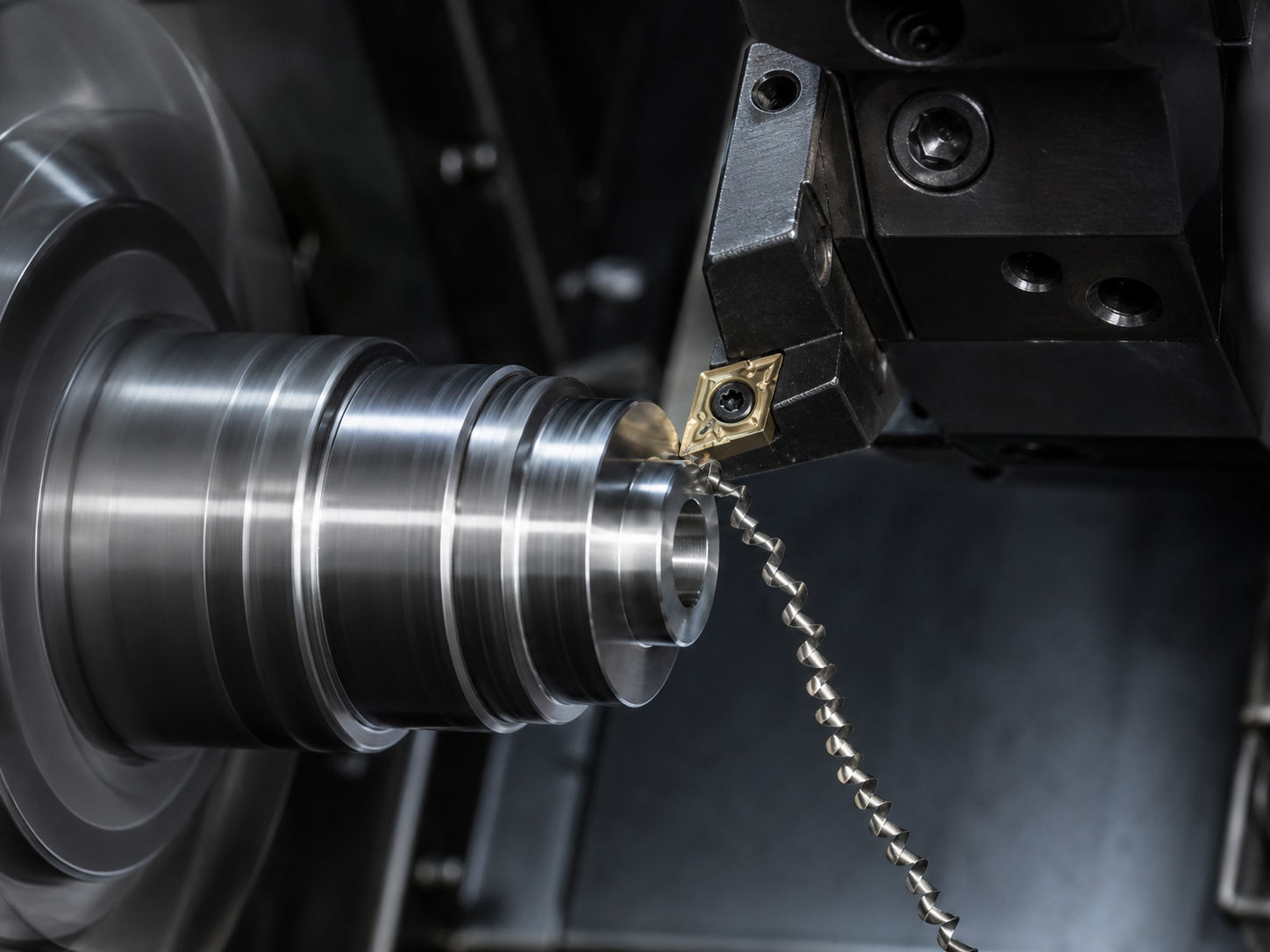
CNC turning is typically the natural starting point for rotational parts: shafts, sleeves, rings, threaded bodies and other components built around a central axis. A workpiece rotates while cutting tools create outside diameters, bores, faces, grooves and threads.
CNC milling is typically the better fit for prismatic or freeform geometry: plates, housings, brackets, pockets, slots, contours and multi-face features. The cutting tool rotates while the workpiece is held in a fixture.
When a combined process makes sense
Many production parts include both rotational and non-rotational features. A turned body may need milled flats, cross holes, keyways or mounting patterns. In those cases, the quote should identify every feature on the drawing or model so the manufacturing route can be planned as one workflow rather than two disconnected jobs.
What to include in your RFQ
- A 2D drawing for dimensions, threads, tolerances and finish callouts.
- A 3D model when available to clarify geometry.
- Material grade, quantity and any approved substitution rules.
- Critical features and inspection expectations.
- Required anodizing, heat treatment or other post-machining steps.
Material and finish affect the route
Aluminum alloys such as 6061 and 7075, stainless steel and titanium respond differently to cutting, workholding and finishing. Surface requirements can also determine when features are machined, masked or checked. Defining the final use of the part helps ensure that the selected process supports both geometry and appearance.
A simple decision framework
Choose turning first when
The main dimensions are diameters along a central axis, and the part is primarily round or tubular.
Choose milling first when
The main features are pockets, planes, patterns, complex profiles or multiple machined faces.
Ask for a combined route when
The part has a rotational base plus milled features, or when your drawing includes both diameter-driven and prismatic geometry.
Send your drawing or model with material, quantity and finish requirements. We coordinate CNC machining around Shenzhen and Dongguan for international orders.
Start an RFQ →