Anodizing and Heat Treatment for CNC Parts: What Buyers Should Specify
Anodizing and heat treatment are often requested together, but they solve different problems. One changes the aluminum surface; the other changes material properties. Clear specifications prevent avoidable questions after machining begins.
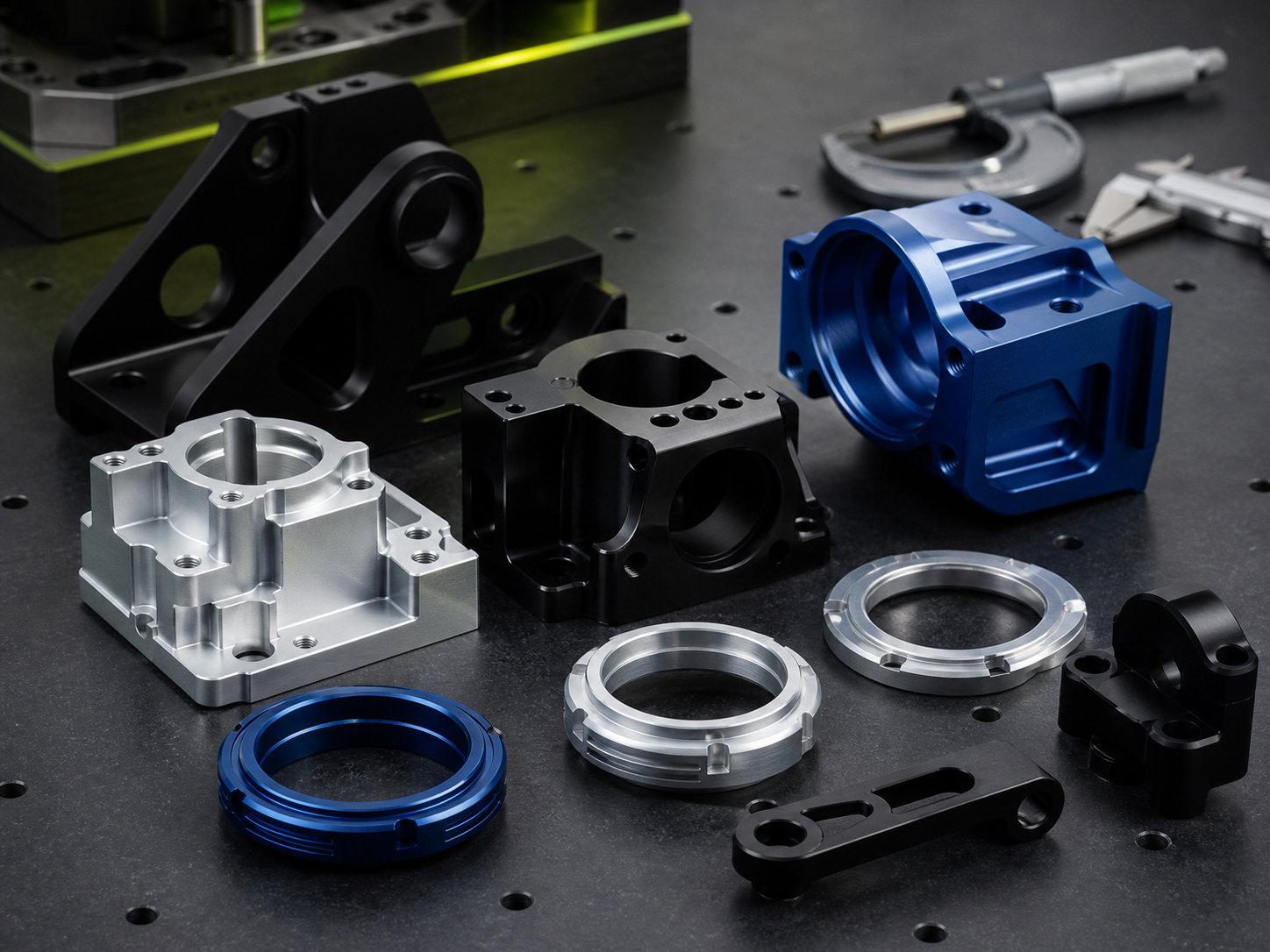
Anodizing: a surface process for aluminum
Anodizing creates a controlled oxide layer on aluminum. Buyers may request it for appearance, identification, corrosion resistance or a specific surface condition. Color alone is not enough for an RFQ: the drawing should state the alloy, finish expectation, color if applicable, cosmetic zones and any areas that must be masked.
Heat treatment: a material-property process
Heat treatment changes the mechanical condition of a material. Its sequence relative to machining matters because material condition can affect machining behavior, distortion risk and final dimensions. The appropriate requirement must come from the drawing, material standard or engineering specification—not from a generic assumption.
What not to leave ambiguous
- Whether cosmetic appearance is critical on all surfaces or only selected faces.
- Whether threads, sealing faces, mating surfaces or electrical-contact zones require masking.
- Whether the specified material condition applies to supplied stock or to the finished part.
- Whether a final inspection is required before or after finishing.
- Whether color samples, process documentation or packaging precautions are needed.
Sequencing matters
For a typical aluminum part, machining is completed before anodizing. But a finished design can include tight fits, threads, critical dimensions or surfaces that require controlled handling. Coordinate the finishing note with the functional requirements of the part, rather than treating it as a final cosmetic checkbox.
How to write a stronger finishing note
Put the material grade, required finish, cosmetic expectations and any protected features directly on the drawing. If your team has a reference sample or color target, identify it in the RFQ. This makes it possible to review the requirement before the production route is finalized.
For 6061 and 7075 projects
Both 6061 and 7075 are commonly selected for machined components, but the right material and finish depend on the application. Share the intended use, loading environment and any appearance requirement so the manufacturing plan can be reviewed against the design intent.
Send it with the material, quantity, destination and any cosmetic requirements. We coordinate machining and post-processing support for international orders.
Discuss your RFQ →